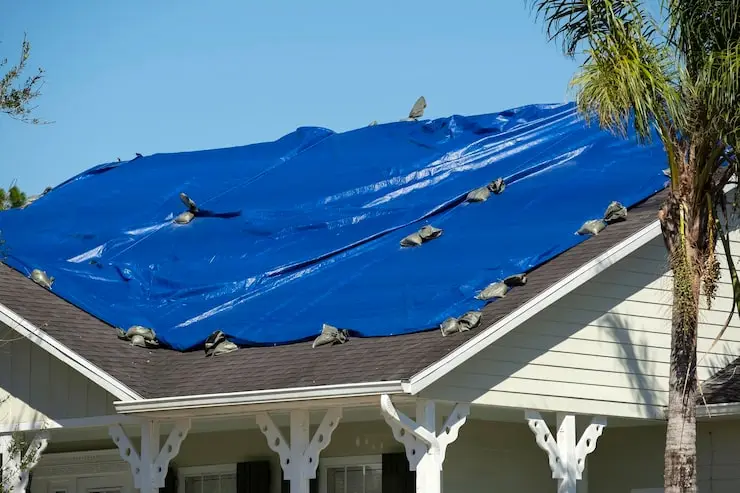
An active ceiling leak is an absolute emergency for a homeowner. When heavy Oklahoma rainstorms push water through your roofing materials, every passing minute causes more damage to your property. Water dripping from a light fixture or pooling on your living room drywall can quickly ruin your furniture, short out your electrical wiring, and destroy your ceilings. Before a local contractor can perform permanent structural repairs, you must act fast to stop the incoming water at the source.
Professional emergency roof tarping is the most effective way to dry-in a building and halt active internal flooding immediately. A heavy-duty, properly secured tarp acts as a temporary waterproof shield over your damaged shingles or flat deck. This prevents subsequent Cleveland County rain showers from entering your attic while you wait for your insurance adjuster or repair crew to arrive.
This guide will show you exactly how to manage an active water leak inside your living space and explain how a professional tarp system protects your home from severe secondary structural rot.
Understanding Ceiling Leaks
An active ceiling leak means water has successfully bypassed your outer shingles, penetrated the underlayment, and soaked through your attic insulation. In Norman, Oklahoma, severe seasonal storms bring intense, wind-driven rain that easily forces water into the tiniest structural gaps. Because water follows the path of least resistance, the puddle on your living room floor or the stain on your ceiling is rarely directly beneath the actual hole in your roof.
To stop a leak from destroying your drywall and framing, you must identify what triggered the structural breach:
- Fractured or missing asphalt shingles: High winds strip away shingle tabs, leaving the bare wood decking exposed to direct rainfall.
- Degraded pipe boot seals: The rubber collars around your plumbing stack vents crack over time due to intense Oklahoma sun exposure.
- Clogged gutter troughs: Leaves and twig debris back up water during heavy downpours, forcing rain up under your bottom eave shingles.
- Rusted chimney flashing: Metal valley linings and corner flashing pull away from brick walls, creating a wide opening for water tracking.
In Norman, Oklahoma, the seasonal storms can exacerbate these issues, making it essential to address leaks promptly. If you notice water stains or dripping, it's crucial to act quickly to prevent further damage. Hiring professionals for Active Roof Leak Tarping Norman OK can save time and ensure safety.
How Roof Tarping Works
Emergency roof tarping acts as a physical, waterproof barrier that completely isolates the damaged area of your roof from the elements. Think of it as a temporary second skin for your house. A professional tarping crew wraps a heavy-duty, commercial-grade poly membrane over your roof peak and anchors it down tightly using wooden termination bars and screws. This prevents water from traveling underneath the fabric during subsequent storm fronts.
While you wait for your professional mitigation team to arrive, you should take immediate internal action to protect your home's structure:
- Move interior assets away: Clear your furniture, electronics, and valuable personal belongings completely out of the active drip path.
- Contain the active drip: Place a heavy plastic bucket or storage bin directly under the leak to catch the falling water.
- Relieve trapped ceiling pressure: If you see a sagging or bulging water blister in your drywall, poke a small hole in the center with a screwdriver to drain the trapped water safely into a bucket before the entire ceiling collapses.
Professional roof tarping services in Norman, OK, can ensure that the tarp is applied correctly and securely, reducing the risk of further leaks.
Step-by-Step Guide to Tarping a Ceiling Leak
Securing an emergency tarp is highly technical and dangerous work. If you must install a tarp yourself during a severe weather emergency before a local Norman specialist can arrive, you must use proper framing and fastening techniques. Simply throwing a cheap plastic sheet down with heavy stones or elastic bungee cords will fail during the first high-wind gust in Cleveland County.
If you have the proper safety equipment, tools, and a secure extension ladder, follow these strict mechanical installation steps to secure your structure:
- Measure and extend past the peak: Unroll a heavy-duty tarp so it covers the damaged area completely and extends at least four feet over the ridge of your roof to prevent rainwater from running under the top edge.
- Roll the edges into furring strips: Wrap the top and bottom edges of the plastic tarp tightly around 2x4 wooden boards or furring strips to create a solid, heavy-duty wooden hem that distributes holding pressure evenly.
- Drive anchors into the roof deck: Screw the wood strips directly through the tarp into your roof decking using long, rust-resistant screws. Never use roofing nails or staples, as high winds will tear the plastic fabric right off the heads.
- Secure the perpendicular side flaps: Screw down additional wooden termination strips along the left and right sides of the tarp to seal the side edges tightly against your shingles and prevent wind uplift.
Best Practices for Stopping Ceiling Leaks
Stopping a severe leak requires a mix of smart outdoor mitigation and immediate indoor water management. If you ignore how water behaves once it gets past your shingles, you can still suffer massive drywall damage even after putting a waterproof barrier on your roof deck. Following the right protocols keeps your property safe and preserves your chances of getting a full insurance reimbursement.
To minimize structural wood rot and keep your living spaces completely dry, apply these critical emergency best practices:
- Always clear loose valley debris first: Before laying down a tarp, sweep away all wet leaves, twigs, and broken shingle granules from the area so your wood framing strips can sit perfectly flat against the roof deck.
- Never puncture active leak valleys: Avoid driving screws or nails directly into the center of a roof valley or near flashing seams, as this creates permanent paths for water to travel into your home's framing.
- Track attic entry pathways immediately: Go into your attic with a bright flashlight while it is raining to trace the water trail along the rafters, as the leak source on your outer shingles is often far away from your ceiling stain.
In Norman, homeowners often benefit from regular roof inspections to catch problems early, especially before the stormy season.
Common Mistakes to Avoid
Emergency leak mitigation leaves zero room for error. If you install an emergency tarp incorrectly, you can trap moisture inside your home and accelerate structural wood rot. Avoid these frequent mistakes to protect your home's framing and ensure your insurance carrier approves your future permanent repair claim:
- Fastening the tarp with heavy bricks or ropes: Never use heavy concrete blocks, stones, or ropes to hold a tarp down on a sloped roof. High Oklahoma winds will slide under the fabric, lift the tarp like a sail, and toss the heavy objects through your windows or onto your vehicles below.
- Tarping under the ridge line: Stopping a tarp short of your roof's highest peak is a massive mistake. Rainwater flowing down the slope will run straight underneath the top edge of your tarp, bypassing your temporary barrier and flooding your ceiling drywall all over again.
- Leaving an emergency tarp on for months: Tarps are temporary, short-term solutions designed to last only a few weeks. The intense sun in Cleveland County will quickly degrade thin blue tarps, causing the plastic to flake, crack, and tear during the next heavy rainstorm.
- Driving screws directly through open shingles: Driving mechanical fasteners blindly into undamaged shingle fields creates dozens of new, permanent hole leaks. Professional crews always wrap the tarp edges around wooden furring strips to minimize deck punctures and keep the system airtight.
By avoiding these pitfalls, you can ensure a more effective temporary solution while planning for permanent repairs.
When to Call a Professional
If you're unsure about your ability to tarp the roof or if the leak is extensive, it's best to call for professional help. Roof Tarping Pros Norman can provide expert assistance and ensure that your home is protected from further damage. They can also help assess the situation and recommend permanent solutions.
Get Help with Roof Tarping in Norman
If you're dealing with a ceiling leak, don't wait for the problem to worsen. Contact us today for expert roof tarping services in Norman. Call (405) 279-0658 for immediate assistance.