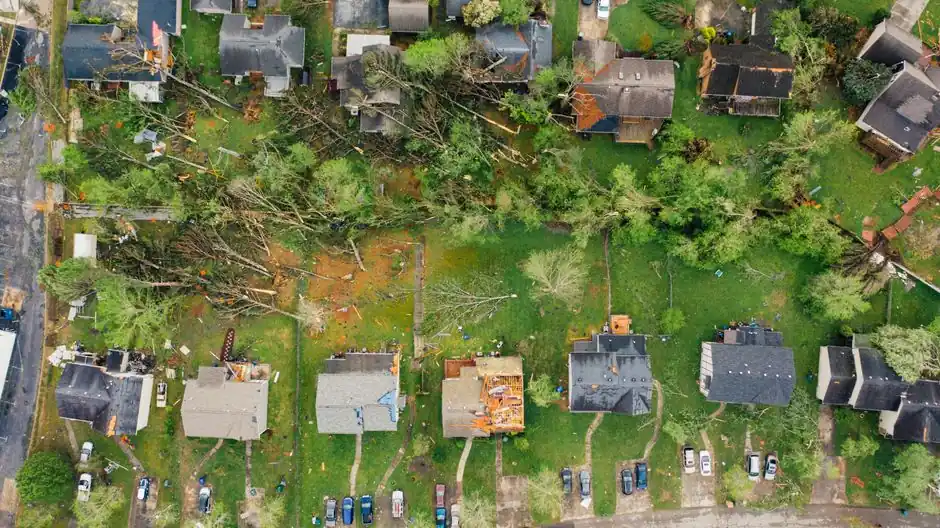
When straight-line winds or severe storm fronts blast through Cleveland County, large tree limbs frequently snap and crash onto residential structures. A fallen oak or elm branch can easily puncture your shingles, fracture your underlying rafters, and shatter your attic vents. Before you can address the physical roof damage, however, you must navigate local municipal codes. Failing to understand city rules regarding tree management can lead to unexpected municipal fines and complicated insurance delays.
The City of Norman Tree Protection Ordinance dictates exactly how dangerous, dead, or storm-damaged trees must be handled on your property. Property owners have specific legal responsibilities when a tree falls near public sidewalks, power lines, or neighboring property boundaries. To keep your property safe and legally compliant, you must coordinate emergency tree clearance with immediate structural roof tarping. This guide explains how local tree codes affect your storm recovery steps and details how to secure your roof quickly without violating city rules.
Understanding Tree Ordinances in Norman
The City of Norman enforces strict municipal codes regarding tree management, preservation, and hazardous removal. When a severe wind event topples a tree onto your roof, you are legally responsible for managing the debris located within your private property lines. However, if the fallen tree or broken limbs originated from a city-owned parkway or public right-of-way (such as the grassy strip between the sidewalk and the street), the city’s Forestry Division is responsible for clearing that specific portion of the obstruction.
Navigating these ordinances during a storm emergency requires knowing the exact legal boundaries of your cleanup duties:
- Immediate hazard emergency exemptions: You do not need to wait weeks for a city permit if a tree is actively crushing your roof. Norman municipal codes allow immediate removal of structural hazards, provided you take clear photos to document the emergency before cutting.
- Neighboring property tree line liabilities: If a healthy tree from your neighbor's yard blows over and punctures your roof, Oklahoma premises liability law treats it as an "Act of God." This means your own homeowners insurance policy must cover the structural tarping and removal costs.
- Public utility power line restrictions: Never attempt to trim or remove fallen branches that are touching or resting near low-hanging power lines. You must immediately report the hazard to Oklahoma Gas and Electric (OG&E) or the city, and wait for their utility crews to kill the live voltage.
The Importance of Emergency Tarping
When high winds tear down tree limbs, they do not just scratch your roof; they punch gaping holes straight through your shingles and wood decking. This instantly breaks your home's thermal and moisture envelope. Leaving a roof puncture uncovered while you wait for tree contractors or insurance claims adjusters allows rain to flood your attic framing, rot your wooden trusses, and ruin your ceiling drywall.
Homeowners should be aware of the tree damage tarping services available to assist in these situations. Securing your roof structure with a heavy-duty tarp immediately after clearing the dangerous branches is critical for several key reasons:
- Fulfillment of legal policy duties: Standard Oklahoma home insurance policies require you to make "reasonable repairs" to prevent secondary water intrusion. Installing a temporary tarp fulfills this clause and protects your right to a full claim payout.
- Prevention of toxic mold growth: Wet attic insulation and damp drywall create a breeding ground for toxic black mold within 24 to 48 hours. Sealing out the rain stops moisture accumulation before mold spores can take root.
- Stabilization of compromised decking: Large tree limbs put massive physical stress on your roof trusses. A professionally installed tarp distributes wind uplift forces evenly across the slope, preventing further structural shifting or ceiling sagging.
How to Comply with Tree Ordinances During Emergencies
When a storm drops a heavy tree limb through your roof, your first focus must be on safety and structural protection, not paperwork. The City of Norman does not require a standard tree removal permit for emergency cutting when a tree poses an active hazard to life or property. However, you must still document the situation thoroughly. If city code enforcement officers inspect your property later, you must be able to prove that the tree was a danger to your home's structure.
To keep your cleanup completely legal and avoid unexpected municipal code violations in Cleveland County, follow these steps:
- Keep the public right-of-way clear: You can stack cut tree debris on your private property, but you must never block public streets, sidewalks, or fire hydrants. The city can fine you if limbs obstruct the public right-of-way.
- Take extensive photo proof before cutting: Use your smartphone to take wide-angle photos of the tree resting on your roof before any crew starts using chainsaws. This proof satisfies both city code enforcement and your insurance adjuster.
- Verify the tree's health condition: Look closely at the stump of the fallen tree. If the wood is completely rotten or hollow inside, take close-up photos. This proves the tree was dead and helps your insurance company establish liability.
Best Practices for Emergency Tarping in Norman OK
Tarping a roof after a tree strike is much harder than fixing a standard hail leak. Tree branches splinter when they snap, leaving sharp wood shards, jagged roofing nails, and broken shingle pieces sticking straight up. If you just lay a plastic tarp over these sharp edges, high Oklahoma winds will rub the fabric against the wood and slice the tarp open within hours.
To ensure your temporary emergency tarp survives the storm and keeps your attic dry, apply these critical roofing protocols:
- Trim away sharp wood splinters completely: Before unrolling any plastic, use a handsaw to cut back jagged roof decking shards and pull out bent nails so you have a flat surface to work on.
- Build a solid wooden support frame: If a tree branch punched a large hole completely through your plywood decking, do not just span the gap with a tarp. Lay thick plywood boards over the hole first so the tarp does not sag and collect water.
- Anchor the tarp over the peak line: Always pull the top edge of your tarp completely over the highest ridge cap of the roof. If you stop the tarp below the peak, running water will flow straight underneath your patch and flood your home.
Following these guidelines can help you effectively manage the aftermath of wind damage.
Common Mistakes to Avoid
Dealing with a combination of structural damage and local municipal codes can be highly stressful. If you handle the cleanup or the emergency installation incorrectly, you risk facing expensive city fines, or worse, having your insurance carrier deny your secondary water damage claim. To protect your property and your wallet after a major storm event in Cleveland County, make sure you avoid these frequent mistakes:
- Cutting down undamaged trees without checking city rules: While the city allows you to cut down a tree that is actively crushing your roof, you cannot clear healthy trees from your yard without a permit. Removing protected trees without authorization can result in heavy code violations and fines from the City of Norman.
- Leaving heavy logs resting on your roof structure: Never install an emergency tarp over a tree limb that is still resting on your roof deck. The immense dead weight of the wood will continue to warp your rafters and can cause your entire ceiling frame to collapse during a secondary storm.
- Using standard bricks or bungee cords as anchors: Tying a tarp down with ropes or weighting it with landscape stones is completely useless against Oklahoma winds. High gusts will catch the loose edges, lift the tarp like a sail, and throw the heavy stones through your home's windows or onto vehicles below.
- Failing to track emergency cleanup expenses: Many homeowners throw away the receipts for chainsaw rentals, debris disposal, and emergency tarping materials. Your insurance policy covers reasonable mitigation costs, so losing these documents means you miss out on full reimbursement.
Avoiding these mistakes can save you time and money while ensuring compliance with local regulations.
When to Call a Professional
Managing massive tree limbs and working on a high, unstable roof slope at the same time is incredibly dangerous. Fallen trees often create hidden structural traps, such as loose electrical wires, weakened rafters, and slick shingle surfaces. Trying to manage this level of destruction on your own without professional equipment increases your risk of catastrophic falls or electrical injuries. It is always safest to hand the job over to an insured, local Norman roof tarping service provider.
Hiring a specialized local emergency mitigation crew provides critical advantages for your property's recovery:
- Safe crane and rigging tree extraction: Professionals use specialized winches, rigging lines, and crane equipment to lift heavy tree trunks off your roof line without causing additional damage to your underlying framing.
- Code-compliant municipal coordination: Local contractors know the exact boundaries of Norman tree laws and can coordinate directly with public utility crews to handle live wires safely and legally.
- Xactimate insurance estimating: Certified crews document the entire loss with high-resolution photos and provide itemized, line-item invoices that align perfectly with what insurance adjusters need to approve your storm claim.
Get Help with Roof Tarping in Norman
For effective emergency tarping solutions that comply with local regulations, reach out to professionals. Call Roof Tarping Pros Norman at (405) 279-0658 for reliable service.