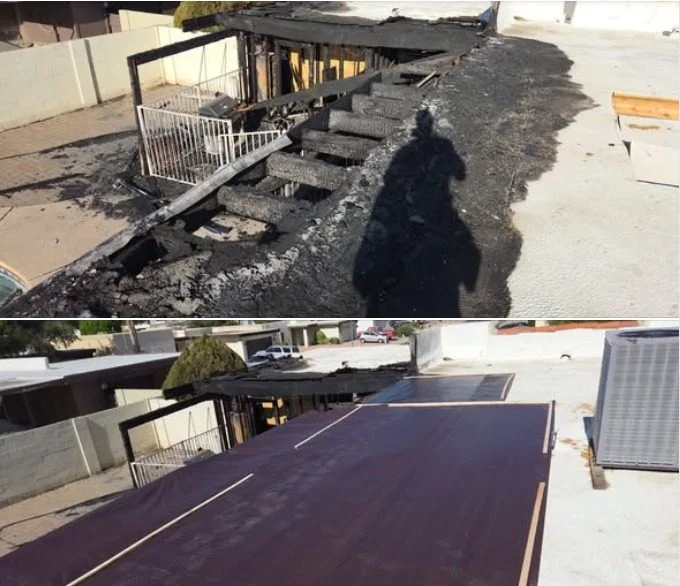
Surviving a residential structure fire is a traumatic experience for any Norman household. Once the Cleveland County emergency crews suppress the flames and clear the smoke, you face an immediate second crisis: your property is completely exposed. Fire leaves a home deeply vulnerable to both weather elements and human threats. To protect your remaining structural assets, your household belongings, and your insurance claim, you must secure the building's envelope right away.
Property owners must coordinate two distinct types of emergency preservation: post-fire roof tarping and secure window boarding. While storm recovery usually focuses only on stopping rainwater, fire recovery requires a dual-defense strategy. You must seal the roof to prevent overhead storm flooding, and lock down the lower walls to stop trespassing, theft, and animal intrusion. This guide breaks down the physical differences, technical purposes, and local regulations for each mitigation method so you can secure your home legally and safely.
Understanding Fire Damage
Fire destroys a building through a combination of extreme heat, heavy smoke, and high-pressure water. To battle a blaze, fire crews often cut ventilation holes in your roof deck and break window glass to vent toxic gases. Even if the flames only impacted one room, the entire structure suffers from water saturation and broken entry points. Before you can touch the property, a City of Norman fire marshal or insurance investigator must officially release the scene as safe to enter.
Once the building is cleared for temporary mitigation, you must address the specific structural failures left behind:
- Vented structural roof decks: Open holes cut by fire crews or burned-away sections of plywood rafters that allow direct rain and sunlight to pour into your home's framing.
- Shattered thermal window panes: Broken glass from heat fractures or manual venting that leaves the lower floor rooms completely open to weather, vandals, and stray animals.
- Compromised load-bearing studs: Charred interior framing and wet drywall layers that are structurally weak and cannot support standard roofing repair weights without careful planning.
The Purpose of Post-Fire Roof Tarping
Post-fire roof tarping is a specialized emergency structural dry-in procedure. When a fire breaks out, the responding fire department frequently cuts large ventilation holes in the highest peaks of your roof to release lethal smoke, heat, and gases. If these deliberate structural openings are left uncovered, a single light rain shower will flood your interior framing walls, wash residual soot and toxic ash into your lower living spaces, and completely destroy whatever personal property survived the fire.
Because the underlying wooden rafters are often charred or weakened by intense heat, post-fire tarp installation requires distinct structural precautions:
- Spanning structural frame gaps: Installers must lay thick plywood sheeting over fire-ventilation holes first to create a solid bridge before pulling the waterproof membrane across the slope.
- Preserving unburned decking fields: Fasteners must be driven exclusively into verified, structurally sound roof joists rather than heat-degraded or charred wood sections that cannot hold screws.
- Mitigating chemical water runoff: The tarp must seal out rain completely so water cannot mix with loose soot, which creates an acidic sludge that permanently stains structural timbers.
The Role of Emergency Window Boarding
Secure window boarding focuses entirely on perimeter defense, structural stabilization, and liability reduction. Fire heat easily shatters standard thermal glass panes, and rescue crews routinely smash out window frames to clear paths for fire hoses. Leaving these ground-level and second-story wall openings completely bare invites immediate secondary disasters, including structural vandalism, looting of surviving assets, feral animal nesting, and severe wind-driven rain intrusion.
To satisfy local municipal safety laws and protect your private property line, emergency board-up protocols utilize rigid building materials:
- CDX structural plywood shields: Technicians cut exterior-grade plywood sheets to fit the exact dimensions of the window casing, completely sealing off the interior from outside view.
- Tension-bolt fastening systems: High-security installations use long carriage bolts and interior wooden bracing blocks to lock the plywood in place without drilling directly into your home's finished siding.
- Public liability reduction: Boarding up open wall cavities prevents neighborhood children or trespassers from wandering into the dangerous, fire-damaged structure and getting injured on your property.
Key Differences: Tarping vs. Boarding Up
While both mitigation methods are essential parts of a complete post-fire emergency response, they serve completely different structural zones and carry distinct operational timelines. Property owners must execute both steps simultaneously to secure a total property dry-in and satisfy their insurance policy requirements.
Understanding how these two defense systems compare across critical field categories ensures your property recovery moves smoothly:
| Feature | Post-Fire Roof Tarping | Secure Window Boarding |
|---|---|---|
| Primary Objective | Stops gravity-driven overhead water intrusion through holes cut by fire crews. | Blocks horizontal wind-driven rain and prevents unauthorized physical entry. |
| Core Materials | Flexible, high-tensile woven polyethylene or vinyl waterproof membranes. | Rigid, heavy-duty CDX structural plywood panels and framing lumber. |
| Installation Zone | High-exposure sloped pitches, roof valleys, ridges, and open ventilation shafts. | Ground-level or upper-story window casings, entry doors, and slider frames. |
| Structural Timeline | Highly time-sensitive temporary fix; must be replaced quickly to avoid charred wood rot. | Can safely remain in place for months during long city code inspections. |
| Local Application | Essential for professional fire damage tarping in Norman OK to stop soot-sludge tracking. | Critical for lower-wall perimeter defense, trespassing liability, and theft prevention. |
Best Practices for Post-Fire Recovery
Recovering from a major home fire requires a methodical, organized approach to protect your property and secure your financial future. The first 48 hours are critical for stabilizing the structure and filing your insurance paperwork correctly. If you skip vital safety steps or rush into decisions without proper tracking, you can accidentally delay your insurance claim or violate local building department safety codes.
To ensure your family stays safe and your home is restored correctly, use this essential post-fire recovery checklist:
- Obtain an official fire department scene release: Never step inside your home until the responding Norman fire marshal explicitly states the building is safe from structural collapse or gas leaks.
- Coordinate emergency property dry-in services: Immediately hire a local team for emergency tarping in Norman to cover ventilation holes and board up shattered windows before the next storm hits.
- Request immediate humanitarian assistance if needed: If the structural damage forces you out of your home, contact local disaster relief agencies like the American Red Cross for immediate emergency housing, food, and clothing.
- Keep an itemized structural loss diary: Document every phone call with your insurance provider, track all hotel receipts under your Loss of Use coverage, and list every damaged item with its purchase date.
Common Mistakes to Avoid
The emotional stress following a residential fire can easily lead to costly management errors. If you attach an emergency tarp incorrectly or neglect your perimeter walls, you can cause serious physical damage to your underlying structure and put your insurance payout at risk. Avoid these frequent mistakes to protect your home's framing and ensure your insurance carrier approves your final claim:
- Leaving ventilation holes open to clear weather: Many homeowners assume they only need a tarp if a rainstorm is in the immediate forecast. Clear weather still exposes your exposed attic space to birds, squirrels, heavy morning dew, and wind-blown dust that ruins surviving structural timbers.
- Entering the property before smoke toxins clear: Rushing inside to save personal assets without proper respirators exposes you to dangerous toxic ash, microscopic soot particles, and carbon monoxide pockets that cling to wet drywall long after the flames are out.
- Signing long-term restoration contracts immediately: Avoid out-of-state roofing crews or public adjusters who pressure you to sign your entire insurance settlement over to them right after a disaster. Take your time, verify local business licenses, and read every single word before signing a contract.
When to Call a Professional
It is crucial to call professionals when dealing with fire damage. Experts can provide the necessary fire damage tarping in Norman OK and window boarding services to secure your home effectively. They can assess the situation and recommend the best course of action based on the extent of the damage.
Get help with Roof Tarping in Norman
If you need immediate assistance with roof tarping or window boarding after a fire, contact us today. Our team at Roof Tarping Pros Norman is ready to help you secure your home effectively. Call us at (405) 279-0658.