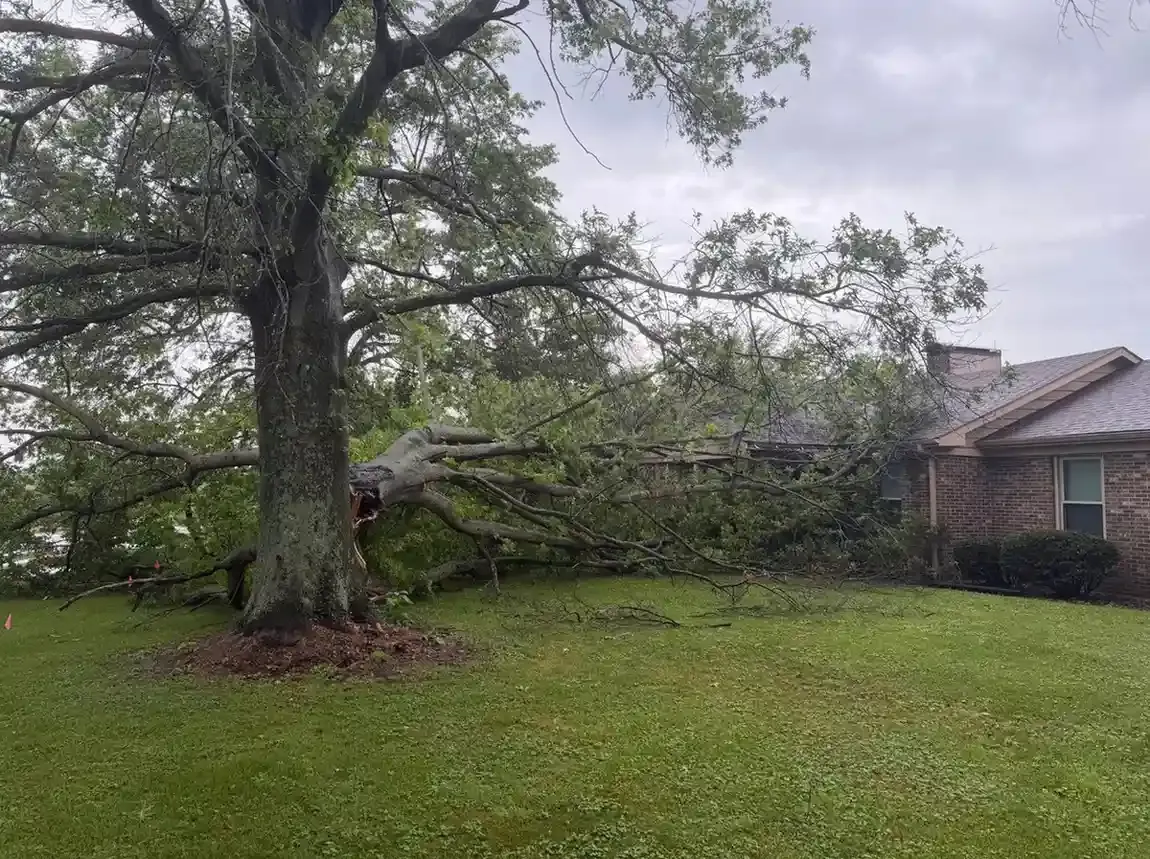
A massive tree trunk crashing through your roof line creates an absolute structural crisis. The deafening sound, shifting walls, and sudden exposure to the elements cause immediate panic for any Norman family. In the chaotic aftermath of a severe Oklahoma storm front, your adrenaline will be pumping, but your decisions over the next sixty minutes will dictate the safety of your household and the success of your homeowners insurance claim.
You must act with absolute precision to manage liabilities and stop active property destruction. Water from a sudden downpour can quickly flood your living areas, and compromised framing can cave in without warning. This guide lays out a strict, minute-by-minute survival and recovery framework to keep your family safe and secure your home during the critical first hour following a tree impact in Cleveland County.
Immediate Actions to Take (Minutes 1 to 30)
Your very first priority is protecting human life. A falling oak or pecan tree can weigh several tons, easily snapping main support rafters, splitting ceiling joists, and severing underlying utility infrastructures. Do not stay inside to look at the damage or gather personal items. If the impact was forceful enough to crack your ceiling drywall or jam your interior doors shut, the structural integrity of your home has been broken, and you must exit the building immediately.
Once every family member and pet is safely accounted for out on the public sidewalk, follow these strict crisis steps:
- Evacuate and check for hidden electrical arcs: Smelling smoke or seeing flickering lights means the tree has torn your main power drop or crushed electrical conduit lines. Walk completely away from the structure to avoid electrocution risks.
- Kill the primary utility feeds from the outside: If you can safely access your exterior meters, shut off your main gas line and electrical breakers to prevent a catastrophic post-impact fire from broken pipes or short circuits.
- Document the initial structural state from a distance: Use your smartphone camera to take wide-angle photos of the tree resting on your house before any emergency response crews touch the debris, preserving your initial proof of loss.
- Secure immediate heavy-duty envelope defense: Once emergency responders clear the scene, your immediate next step is calling for professional Fallen Tree Structural Tarping in Norman OK to bridge the structural framing gaps before a secondary rain front floods your home.
Assessing the Damage (Minutes 30 to 45)
Once the immediate panic passes, you must analyze the structural damage to build your emergency response plan. Never step underneath a sagging drywall ceiling or walk beneath a dangling tree canopy. Large oaks or elms often carry dead weight limbs that can snap long after the initial fall. Stand back on the street or public sidewalk where you have a clear view of the entire impact point.
Use your smartphone zoom or a pair of binoculars to check for these major structural failures without putting yourself in harm's way:
- Snapped or displaced ridge beams: Look across the peak of your roof. If the main horizontal ridge line looks bent, split, or cracked, the entire framing system is unstable.
- Crushed or shattered attic rafters: Check if structural tree weight has forced the roof decking downward into the attic space, which creates immediate ceiling collapse risks.
- Severed plumbing vents and flashing seams: Look for bent metal valley liners, torn rubber pipe boots, or smashed aluminum turtle vents that will act as open funnels for rain.
If you notice any significant structural issues, it's best to avoid climbing onto the roof. Instead, document everything with photos for your insurance claim. You can also consider hiring a professional for a thorough inspection.
Preventing Further Damage (Minutes 45 to 60)
The final fifteen minutes of the first hour must focus entirely on loss mitigation. In Cleveland County, severe storm systems rarely bring just one wind gust; they are usually followed by hours of heavy rain. A large structural puncture allows hundreds of gallons of water to flood your attic insulation, rot your framing, and ruin your lower floor rooms. To prevent your insurance carrier from denying your secondary water damage claims, you must take active steps to close the envelope.
Because working around heavy logs and broken plywood requires specialized rigging and safety equipment, focus on these critical containment steps:
- Place internal water catchments immediately: If it is safe to enter the lower floor, clear out electronics and position large plastic storage bins under active ceiling drips to save your flooring.
- Relieve trapped water weight in drywall: If you see a swelling, water-filled blister forming on your ceiling drywall, poke a hole in the center with a screwdriver to drain the fluid safely into a bucket before the plaster caves in.
- Coordinate rapid professional dry-in services: Call an insured local mitigation team to install a heavy-duty poly tarp. The crew must build a wooden support frame over the structural hole first so the tarp does not sag and collect water.
Common Mistakes to Avoid
The chaos following a sudden tree collapse can easily lead to costly management errors. Property owners often act out of panic, trying to clean up the mess immediately to assess the underlying structural damage. However, rushing into a tree strike zone without a clear, strategic plan can ruin your insurance claim and put your household in severe physical danger.
To protect your property's framing and ensure your insurance carrier processes your storm claim without any pushback, make sure you avoid these frequent first-hour pitfalls:
- Attempting a DIY chainsaw extraction: Never try to cut or pull a fallen tree off your roof yourself. Large oak and pecan logs weigh thousands of pounds and are under immense physical tension; cutting the wrong limb can cause the trunk to shift suddenly, crushing your structural framing or kicking back and causing fatal injuries.
- Walking beneath sagging interior drywall ceilings: Entering your home to save personal items while a tree is still resting on your roof is a massive gamble. The shifting weight of the trunk can cause weakened ceiling joists and cracked wood rafters to cave in without warning, trapping anyone inside.
- Delaying your official insurance claim notification: Waiting until a tree crew completely clears the wood to contact your insurance provider is a major mistake. Your policy requires a prompt notice of loss, so you must establish your claim number immediately in the first hour before changing the state of the property.
- Failing to log peripheral utility damage details: Homeowners often focus only on the main roof impact and ignore connected utility structures. Failing to take photos of torn service drops, bent electric masts, or crushed gas regulators right away complicates the separate claims needed for utility repairs.
These mistakes can complicate the recovery process and potentially lead to more costly repairs.
When to Call a Professional
While some tasks can be handled by homeowners, many situations require professional help. If you're unsure about the extent of the damage or how to proceed, it's wise to call in experts. Services like tree removal and roof tarping in Norman can provide immediate assistance and peace of mind.
Roof Tarping Pros Norman is equipped to handle emergency situations efficiently, ensuring your home is protected from further damage.
Get Help with Roof Tarping in Norman
Dealing with a fallen tree can be overwhelming, but you don't have to face it alone. For expert assistance with roof tarping in Norman, contact us today at (405) 279-0658.