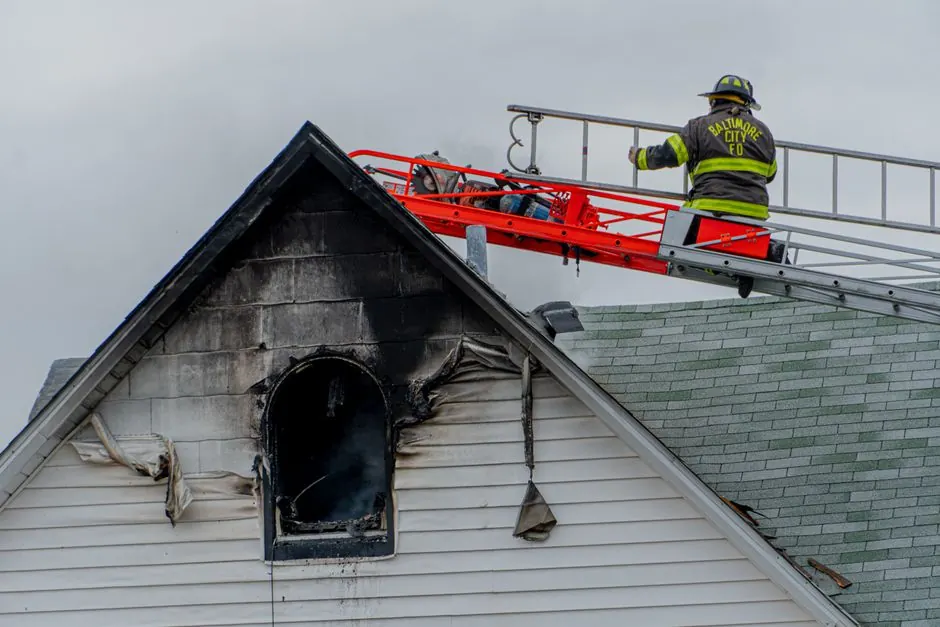
Watching a local fire department cut a massive hole in your roof during a fire emergency is an alarming sight for any homeowner. In the middle of an already traumatic crisis, seeing emergency crews chop through your shingles, rafters, and drywall can look like unnecessary structural destruction. However, this strategic tactical maneuver is a highly calculated firefighting procedure. It is designed to save lives, protect your remaining property assets, and stop the fire from consuming your entire house.
Once the responding engines clear the scene and the emergency passes, those intentional ventilation holes present an immediate second crisis. A house with an open roof line has zero structural protection against the elements. To prevent a single Cleveland County rain shower from turning surviving rooms into a total structural loss, you must act fast. This guide breaks down the physical science behind why firefighters cut your roof and details why immediate emergency mitigation is critical to saving your home.
Why Fire Departments Cut Holes in Roofs (Vertical Ventilation)
Firefighters cut holes in a roof deck to perform a tactical maneuver called vertical ventilation. When a structure fire breaks out, the interior spaces quickly trap superheated gases, lethal carbon monoxide, and thick black smoke. Because heat and smoke naturally rise, they pool against the highest ceiling lines and cook the structural framing. If this pressure is not relieved immediately, the extreme heat can cause a "flashover," an explosive event where every single object in a room spontaneously bursts into flames at the same time.
By cutting a hole directly above the seat of the fire, emergency crews create a controlled "chimney effect" that fundamentally changes the interior environment:
- Releases superheated interior thermal layers: Venting the roof allows 1,000-degree gases to escape into the open sky, immediately lowering the temperature inside your living spaces.
- Clears toxic smoke to improve visibility: Removing the trapped smoke allows fire crews inside to see clearly, locate hidden hotspots behind walls, and find trapped family members or pets faster.
- Redirects the natural path of the flames: Creating an overhead exit pulls the fire upward in a tight channel, stopping the flames from spreading horizontally through your attic framing and saving neighboring rooms.
While vertical ventilation is a life-saving tool during an active blaze, it leaves your property completely open to subsequent weather damage. To protect whatever belongings survived the fire, you must coordinate professional fire damage tarping in Norman OK as soon as the building inspector or fire marshal officially releases the scene.
The Importance of Tarping After Fire Damage
Securing an open structure after a fire is a critical legal and structural priority. Once the fire department completes suppression efforts, your home's framing is completely vulnerable to secondary environmental hazards. Leaving vertical ventilation holes open to the clear sky does not just invite rain; it allows daily atmospheric humidity and morning dew to saturate the unburned, charred timber framing. This moisture accelerates wood decay and creates an ideal breeding ground for toxic black mold inside your walls within 24 to 48 hours.
To protect your remaining household assets and ensure your insurance carrier approves your property loss claim, you must understand the immediate risks of leaving a fire-damaged structure exposed:
- Prevention of acidic soot-sludge tracking: Rainwater mixing with loose, dry soot creates a highly corrosive, acidic liquid that seeps down through floorboards, permanently staining surviving drywall and framing.
- Elimination of preventable loss exclusions: Standard Oklahoma property insurance policies require you to make immediate "reasonable repairs" to secure the building envelope after a loss. Neglecting to tarp the roof can invalidate coverage for any interior items ruined by later weather.
- Exclusion of nesting wildlife and birds: Open attic entry points attract pigeons, squirrels, raccoons, and feral pests looking for shelter, creating severe sanitation issues and adding expensive wildlife remediation costs to your recovery list.
In Norman, the weather can be unpredictable, making timely tarping even more critical. The longer you wait, the higher the risk of additional damage.
How to Tarp a Roof After Fire Damage
Post-fire roof mitigation is completely different from fixing a standard storm leak. You can never approach a fire-damaged roof deck as a DIY project. Extreme heat fundamentally alters the cellular structure of wooden rafters, making them brittle, unstable, and prone to sudden collapse under human weight. Furthermore, shifting a tarp over active soot layers kicks up toxic, microscopic ash particles that should never be inhaled without specialized commercial respirator equipment.
Professional mitigation crews follow strict mechanical installation protocols to dry-in a fire-damaged building safely without causing further structural sagging:
- Spanning ventilation cavities with plywood: Before unrolling any plastic membranes, installers lay thick CDX plywood boards over the open ventilation holes to create a solid structural bridge that can shed rainwater.
- Anchoring exclusively into unburned joists: Crews use high-powered electronic sensors to map out the roof framework, driving heavy-duty grip screws strictly into verified, structurally sound timber trusses rather than charred wood.
- Mechanical wood strip termination systems: Technicians wrap the heavy-duty, UV-resistant poly tarp edges around wooden 2x4 furring strips. These strips are screwed tightly to the clean shingles to create a wind-resistant, airtight seal.
Roof Tarping Pros Norman can provide the expertise needed to ensure the job is done correctly.
Common Mistakes to Avoid
Securing an open building envelope after a structure fire leaves absolutely zero room for error. Because the underlying wooden roof framing has already been stressed by extreme heat and high-pressure water, an improper emergency installation can accelerate structural decay and ruin your insurance payout. Property owners must avoid frequent post-disaster pitfalls to ensure their remaining assets stay protected while local building officials and adjusters process the property loss claim.
To safeguard your home's structural framing and streamline your insurance reimbursement process in Cleveland County, make sure you avoid these frequent mistakes:
- Driving mechanical fasteners blindly into charred wood framing: Driving screws or nails into burnt, carbonized rafters is completely useless. Charred wood loses its density and holding strength, meaning high Oklahoma winds will easily rip the fasteners out and blow your temporary patch away during the next storm.
- Stopping the waterproof membrane short of the roof peak: Laying an emergency tarp exclusively over a ventilation hole without extending it over the ridge cap is a major mistake. Gravity-driven rainwater flowing down the upper slope will run straight underneath the top edge of your patch, flooding your attic framing all over again.
- Trapping wet internal attic moisture permanently: Tarping a roof deck that is still completely saturated with standing firefighting water traps high humidity inside your attic. Without proper temporary dehumidification equipment running downstairs, this trapped moisture will trigger rapid wood rot and extensive black mold growth within 48 hours.
- Using cheap retail-grade tarps weighted with loose bricks: Thin blue tarps from local hardware stores degrade rapidly under intense sun exposure and shred within a few days. Furthermore, weighting a tarp down with heavy stones or bricks on a sloped pitch is incredibly dangerous, as high winds can turn those loose objects into flying projectiles.
By avoiding these mistakes, you can protect your home more effectively after a fire.
When to Call a Professional
If you are unsure about how to tarp your roof or if the damage is extensive, it's time to call a professional. Roof Tarping Pros Norman specializes in emergency roof care after fire incidents. Our team can assess the situation and provide the necessary services to secure your home.
Get help with Roof Tarping in Norman
If your roof has been damaged by fire, don't wait. Immediate action is crucial. Contact us at (405) 279-0658 for professional roof tarping services in Norman.